Guangzhou Huite Sealing Machinery Co., Ltd.


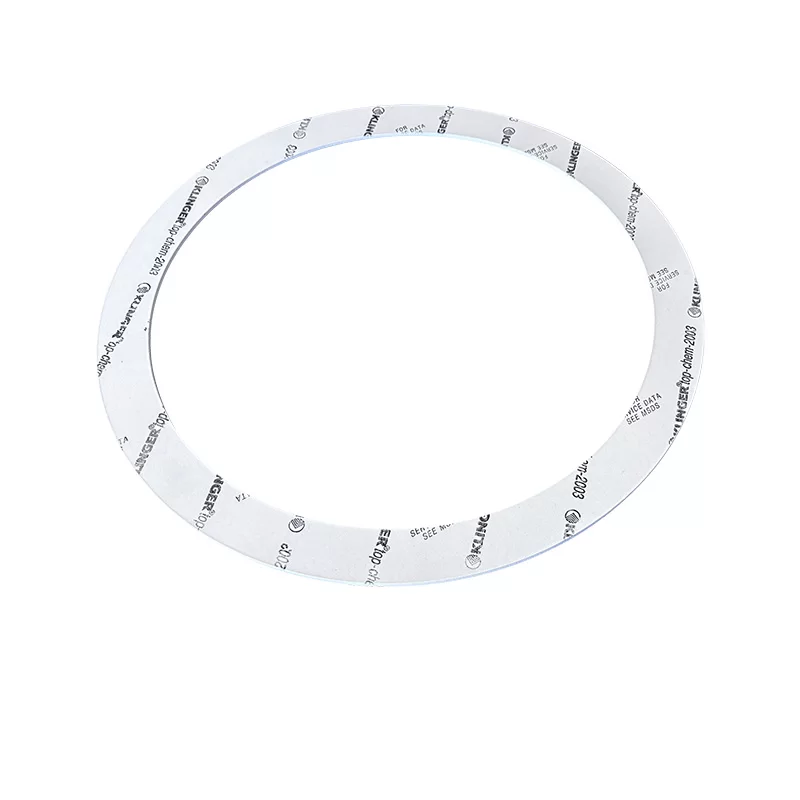
When industrial operations face extreme thermal cycling and high-pressure environments, standard sealing materials often succumb to mechanical stress, leading to costly fugitive emissions and unplanned downtime. The Reinforced Graphite Gasket, specifically the Donit Grafilit Em series, is engineered to eliminate these failure points. By integrating high-strength metal inserts into a high-purity graphite matrix, these gaskets provide the structural integrity required for critical piping systems where blow-out resistance is non-negotiable.
For engineers in the petrochemical and power generation sectors, selecting a sealing solution isn't just about material compatibility, but about ensuring operational safety under the most aggressive chemical media. This reinforced technology bridges the gap between the chemical inertness of graphite and the mechanical robustness of metal, offering a zero-leakage performance that maintains stability from cryogenic temperatures up to 450°C.

The superiority of the Reinforced Graphite Gasket lies in its composite construction. While standard flexible graphite is prized for its compressibility and chemical resistance, it lacks the internal strength to resist "blow-out" when subjected to extreme pressure spikes. The Donit Grafilit Em series solves this by incorporating a high-strength metal insert or mesh that acts as a skeleton, preventing the graphite from migrating or extruding from the flange face.
This reinforcement does not compromise the essential sealing properties of graphite. The material remains highly compliant, allowing it to fill microscopic flange irregularities and create a gas-tight seal without requiring excessive bolt torque. The resulting synergy provides exceptional mechanical stability, making it an ideal choice for high-pressure industrial flanges that undergo frequent thermal expansion and contraction.

In the petrochemical and oil and gas refineries, flanges are often exposed to a combination of aggressive acids, alkalis, and fluctuating pressures. The Donit Grafilit Em is specifically deployed in these sectors to minimize fugitive emissions. Its chemical inertness ensures that the seal does not degrade when in contact with volatile organic compounds or corrosive processing fluids, while the reinforcement ensures the seal stays in place during pressure surges.
Power generation plants, particularly those utilizing high-temperature steam, rely on these gaskets for valve and pump sealing. The ability to withstand severe thermal cycling is critical here; as temperatures fluctuate, the gasket must maintain a constant contact pressure. The reinforced structure prevents the graphite from wearing thin or cracking, significantly extending the mean time between replacements (MTBR) and reducing plant maintenance costs.
Furthermore, in chemical processing plants, the transition from cryogenic storage to high-heat reactions requires materials that don't embrittle or soften. The wide temperature spectrum of reinforced graphite makes it a versatile solution for manholes and heat exchanger interfaces where safety and efficiency are paramount.
Procuring high-performance gaskets requires more than just matching a part number; it requires a verification of the material source. As an authorized distributor of KLINGER and DONIT, HUITE Sealing ensures that every reinforced graphite gasket is manufactured from genuine, certified sheets. This eliminates the risk of using substandard graphite that may contain impurities, which could lead to premature oxidation or seal failure.
Quality assurance for these components involves rigorous testing of the reinforcement integrity. A professional industrial gasket manufacturer must verify that the metal insert is perfectly centered and bonded to the graphite to ensure uniform compression across the entire seal area. ISO 9001:2015 certification provides the framework for this consistency, ensuring that every batch meets international gasket standards for thickness and density.
Beyond the product itself, technical support is essential for complex installations. Determining the correct torque levels for reinforced graphite is different from standard rubber or PTFE gaskets. Expert guidance on material selection and custom engineering for non-standard dimensions ensures that the gasket performs as intended, preventing the common mistake of over-compression which can damage the flange faces.
| Performance Metric | Standard Graphite | Reinforced Graphite (Em) | Operational Impact |
|---|---|---|---|
| Blow-out Risk | Moderate to High | Minimal | Reduced Safety Risk |
| Thermal Cycling | Prone to Wear | Highly Stable | Lower Maintenance |
| Seal Lifespan | Moderate | Exceptional | Lower Replacement Cost |
| Leakage Rate | Low | Ultra-Low | Minimized Product Loss |
| Installation Time | Standard | Optimized | Reduced Labor Hours |
For global operations, the reliability of the supply chain is as critical as the reliability of the gasket itself. Managing an inventory of various sizes and specifications—ranging from ASME to DIN standards—requires real-time tracking to avoid production halts. The ability to source genuine DONIT and KLINGER materials centrally allows for a streamlined procurement process, reducing the lead time for critical replacement parts in shipbuilding and marine engineering.
Customization is another key factor. Many industrial projects require tailored dimensions or specific reinforcement types to meet unique project requirements. By providing one-stop professional service, manufacturers can offer tailored kits that include not only the gaskets but also related components like flange insulation kits, ensuring that the entire sealing system is compatible and certified for the specific environment.
Compliance tracking is the final pillar of a professional supply chain. Every batch of reinforced graphite gaskets should be accompanied by full documentation and traceability. This is particularly important in the Oil & Gas and Chemical industries, where regulatory audits require proof that all installed components meet specific safety and environmental standards, such as API 6FB fire tests for high-pressure applications.
The industry is moving toward "zero-leakage" goals to meet stricter environmental regulations regarding fugitive emissions. This shift is driving the adoption of reinforced graphite over traditional non-asbestos materials. As plants push for higher operational temperatures to increase efficiency, the demand for materials that can maintain mechanical properties at the extreme edge of the temperature spectrum will continue to grow.
We are also seeing a trend toward integrated sealing solutions. Rather than treating gaskets as commodity items, companies are adopting a lifecycle management approach. This involves analyzing the specific thermal and chemical profile of a flange and selecting a gasket—like the Donit Grafilit Em—that optimizes the balance between initial cost and long-term operational expenditure.
Digitalization in supply chain management will further enhance how these components are procured. Real-time availability of genuine branded sheets and the ability to quickly pivot to custom engineering means that downtime can be predicted and minimized. The future of industrial sealing lies in the combination of advanced material science and precise, data-driven procurement logistics.
Reinforced gaskets include a metal insert or mesh that provides critical mechanical strength, preventing the graphite from blowing out under high pressure and resisting deformation during severe thermal cycling.
Yes, high-quality reinforced graphite is capable of maintaining its sealing properties at extremely low temperatures, making it suitable for cryogenic services down to -200°C.
While the reinforcement adds strength, the gasket is engineered to maintain sufficient compressibility to ensure a tight seal against flange faces without requiring excessive bolt torque.
They are widely used in the petrochemical industry, oil and gas refineries, chemical plants, and power generation facilities where high-temperature sealing is critical.
Graphite naturally oxidizes at high temperatures in oxygen. However, the reinforced structure helps maintain the physical seal as the material ages, although specialized inhibitors can be used for extreme cases.
You should refer to the flange standard (e.g., ASME or DIN) and the nominal pipe size (NPS). Our technical team can provide customized kits based on your specific piping diagrams.
Ready to upgrade your industrial sealing performance? Contact HUITE Sealing today for expert guidance on selecting the right reinforced graphite solutions for your high-pressure applications.