Guangzhou Huite Sealing Machinery Co., Ltd.



0%
The TESNIT BA-U gasket represents a critical component in a vast array of industrial applications, primarily focused on ensuring leak-proof seals in high-pressure, high-temperature, and chemically aggressive environments. Its significance stems from its ability to maintain operational efficiency, safety, and environmental protection across diverse sectors. Understanding the properties and applications of the TESNIT BA-U gasket is crucial for engineers, maintenance personnel, and procurement specialists alike, as its proper selection and installation directly impact system reliability and longevity.
Globally, the demand for robust sealing solutions like the TESNIT BA-U gasket is continuously increasing, driven by expanding industrialization in emerging economies and the ever-stringent regulations surrounding environmental safety and emission control. According to industry reports, the global gasket and sealing market is projected to reach \$XX billion by 2028, with specialized gaskets like BA-U experiencing significant growth due to their superior performance characteristics. This growth underscores the increasing importance of reliable sealing solutions in critical infrastructure and manufacturing processes.
The TESNIT BA-U gasket addresses a core challenge in industrial operations: preventing costly leaks and ensuring system integrity. Failures in sealing systems can lead to production downtime, material loss, environmental contamination, and potentially hazardous safety risks. The BA-U gasket, with its unique design and material composition, offers a solution to these problems, providing a durable and reliable seal even under extreme conditions.
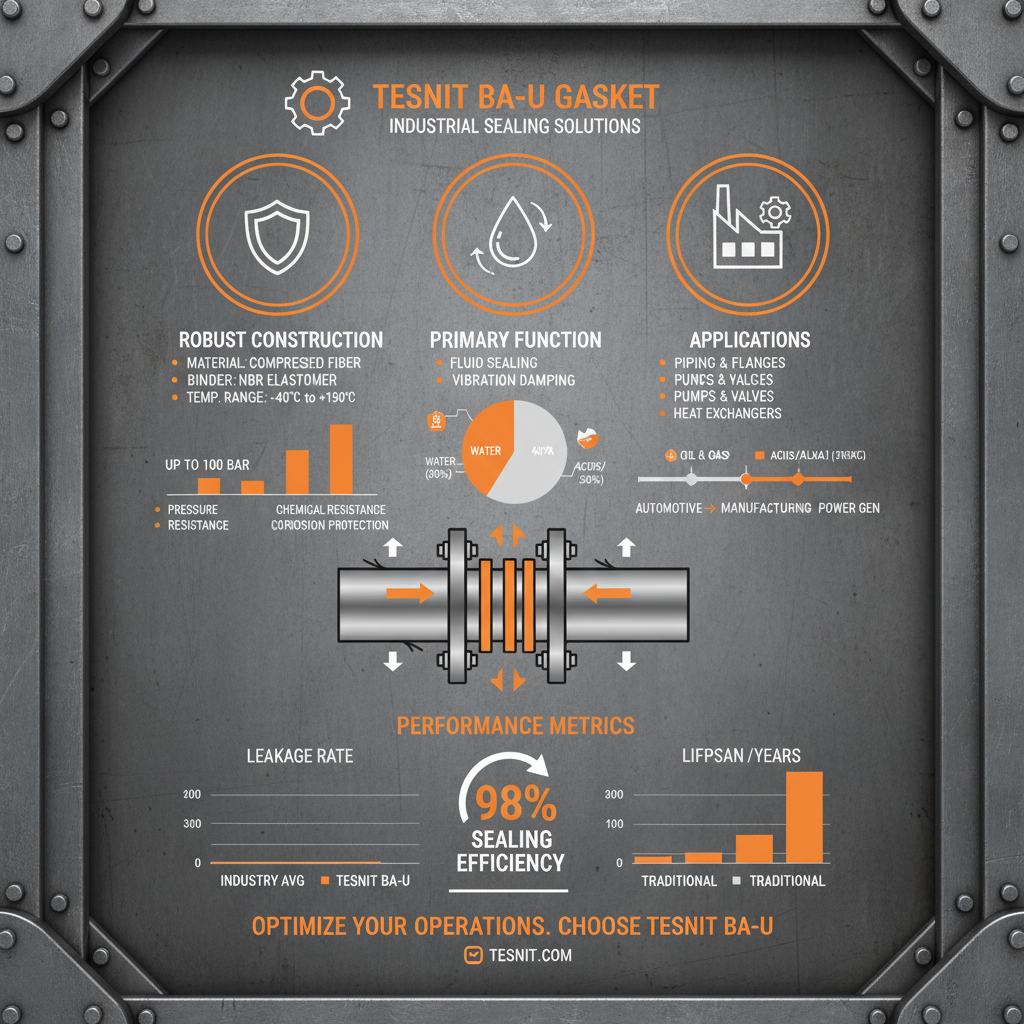
Table of Contents [Hide]
The Core Principles of TESNIT BA-U gasket
The fundamental principle behind the TESNIT BA-U gasket lies in its ability to conform to flange irregularities while maintaining a consistent compressive force. This is achieved through a combination of carefully selected materials, precise manufacturing techniques, and a unique gasket geometry. The gasket’s design allows for optimal sealing performance even with variations in surface finish, flange distortion, or operating conditions.
The effectiveness of a TESNIT BA-U gasket is heavily reliant on proper installation and torque control. Correct torque application ensures sufficient compression, creating a tight seal and preventing leakage. Inadequate torque, or uneven distribution of torque, can compromise the gasket’s performance and lead to premature failure. TESNIT BA-U gasket requires adherence to manufacturer’s recommendations for optimal performance.
FAQS
What are the primary benefits of using a TESNIT BA-U gasket over a traditional flat gasket?
The TESNIT BA-U gasket offers superior sealing performance, particularly in applications with flange imperfections. Its spiral-wound design allows it to conform to uneven surfaces, creating a tighter, more reliable seal compared to traditional flat gaskets. This translates to reduced leakage, increased operational efficiency, and lower maintenance costs. It's also better suited for high-pressure and temperature environments.
How do I determine the correct TESNIT BA-U gasket for my specific application?
Selecting the right TESNIT BA-U gasket requires careful consideration of several factors, including the operating pressure, temperature, and the chemical compatibility of the fluid being sealed. You'll need to specify the flange size and type, as well as the required level of performance and safety. Consulting with a gasket specialist or referring to the manufacturer’s technical data sheet is highly recommended.
What is the recommended torque specification for installing a TESNIT BA-U gasket?
Proper torque application is critical for ensuring optimal sealing performance. The recommended torque specification varies depending on the gasket size, flange material, and operating conditions. Always refer to the manufacturer’s installation instructions and use a calibrated torque wrench. Uneven torque distribution can compromise the gasket’s integrity and lead to leaks.
Can TESNIT BA-U gaskets be reused after disassembly?
While technically possible, reusing a TESNIT BA-U gasket is generally not recommended. During disassembly, the gasket can become damaged or lose its resilience, compromising its sealing performance. It's best practice to replace the gasket with a new one to ensure a reliable and leak-free seal. The cost of a new gasket is significantly less than the potential consequences of a failure.
What materials are TESNIT BA-U gaskets commonly made from?
TESNIT BA-U gaskets typically utilize a combination of materials, including stainless steel for the winding element and graphite or PTFE for the filler. The stainless steel provides strength and corrosion resistance, while graphite and PTFE offer excellent chemical compatibility and sealing properties. Other materials like carbon steel and Inconel can also be used depending on the application requirements.
What is the typical lifespan of a properly installed TESNIT BA-U gasket?
The lifespan of a TESNIT BA-U gasket can vary significantly depending on operating conditions and the nature of the sealed fluid. However, with proper installation and maintenance, a TESNIT BA-U gasket can reliably perform for several years. Regular inspections and proactive replacement are recommended to prevent unexpected failures and maintain system integrity.
Conclusion
In conclusion, the TESNIT BA-U gasket stands as a critical component in ensuring the reliable and safe operation of countless industrial processes. Its unique design, robust construction, and adaptability to various operating conditions make it a preferred choice for sealing high-pressure, high-temperature, and chemically aggressive systems. Understanding the core principles of its functionality, application, and maintenance is paramount for maximizing its benefits.
Looking ahead, continued innovation in materials science and manufacturing techniques will undoubtedly lead to even more advanced TESNIT BA-U gasket solutions. Embracing these advancements, along with proactive maintenance practices, will ensure optimal performance, minimized downtime, and a sustainable approach to industrial sealing. For more information and to explore our range of TESNIT BA-U gaskets, visit our website at www.gzhtmf.com.
Related Posts

Updated:

Michael Johnson
Michael Johnson is a dedicated Sales Engineer at HUITE Sealing, focused on the Marine and Shipbuilding industries. He boasts 8 years of experience in technical sales, providing tailored gasket solutions for various vessel types and offshore platforms. Michael holds a strong understanding of marine regulations and requirements. He actively participates in industry trade shows and builds strong relationships with key clients, advocating for the benefits of our reinforced graphite and rubber gaskets. He prides himself on delivering exceptional customer service and rapid response times.


