In the contemporary industrial landscape, the pursuit of "Zero Fugitive Emissions" has moved from a corporate sustainability goal to a strict regulatory mandate. As chemical plants and refineries strive to comply with evolving environmental standards, the focus has shifted toward the microscopic interfaces of bolted joints. Among the various materials available for high-performance sealing, graphite stands alone due to its unique combination of chemical inertness, thermal stability, and conformability. However, the true potential of graphite is only realized when it is integrated into specialized mechanical structures, specifically designed to address the challenges of low-load sealing and high-vibration environments.
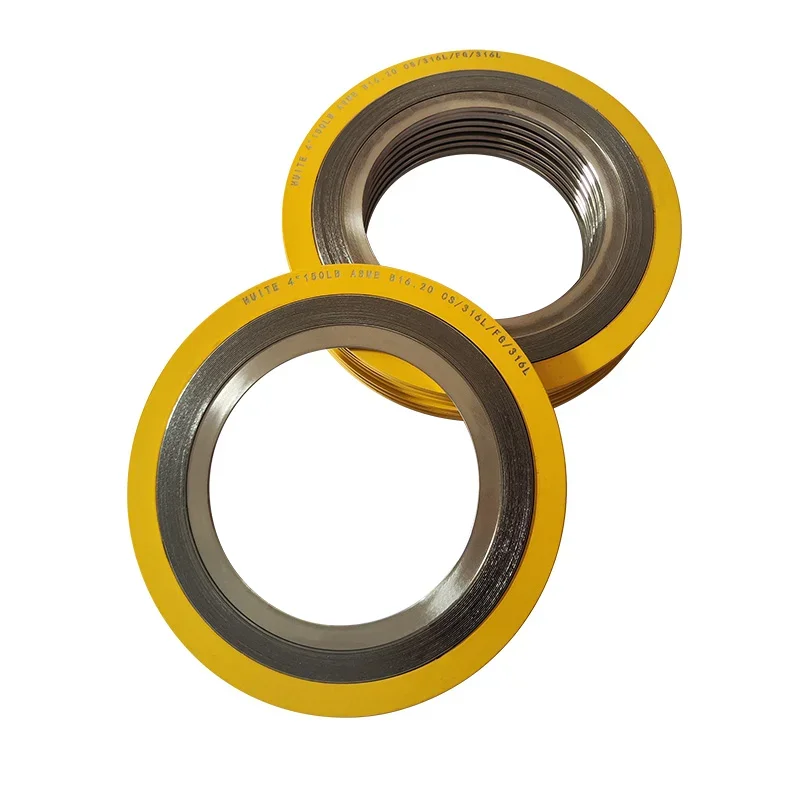
Interfacial Science and the Low Stress Graphite Spiral Wound Gasket
The primary failure mode of a traditional flange joint is not usually a rupture of the gasket itself, but rather a failure at the interface between the gasket and the flange face. To achieve a gas-tight seal, the sealing element must physically "flow" into the microscopic peaks and valleys—known as the phonographic finish—of the flange surface. A low stress graphite spiral wound gasket is engineered specifically to facilitate this flow at significantly reduced compressive loads.
In standard spiral wound gaskets, the metal winding density is often so high that it acts as a structural barrier, preventing the graphite from being fully mobilized until extreme bolt torque is applied. This creates a risk for Class 150 or Class 300 flanges, which can warp or "rotate" under such high loads. The low stress graphite spiral wound gasket utilizes a modified winding pitch and a thinner metal ribbon profile. This design ensures that the graphite is the first component to make contact with the flange. Because graphite is naturally lubricious and soft, it acts as a "solid fluid," filling every scratch and imperfection on the metal surface almost immediately.
This "low-stress" capability is a game-changer for Maintenance, Repair, and Operations (MRO) teams. In aging facilities where flanges may have suffered minor corrosion or mechanical damage, a standard gasket would require excessive force to seal—force that might snap old bolts or crack brittle flanges. The low stress graphite spiral wound gasket provides a safety margin, allowing for a high-integrity seal (often meeting Tightness Class A standards) with a fraction of the torque. This not only ensures environmental compliance regarding VOC (Volatile Organic Compound) emissions but also protects the mechanical infrastructure of the plant.
Compositional Integrity of the Low Stress Graphite Filler Spiral Wound Gasket
The effectiveness of any graphite-based seal is inextricably linked to the quality and processing of the filler material. A low stress graphite filler spiral wound gasket utilizes high-purity, exfoliated flexible graphite tape. The manufacturing of this material is a marvel of chemical engineering: natural flake graphite is treated with an intercalating acid and then subjected to rapid thermal expansion. This causes the graphite flakes to expand up to 80 times their original volume, creating a "worm-like" structure that can be pressed into a flexible tape without any chemical binders or resins.
In a low stress graphite filler spiral wound gasket, the density of this filler is meticulously calibrated. If the graphite is too dense, it becomes rigid and requires high loads to seal; if it is too loose, it can be washed away by high-velocity fluids. The "low stress" designation signifies that the manufacturer has optimized the filler-to-metal ratio. The graphite is allowed to protrude slightly above the metal windings—a design often referred to as "filler-rich."
When the flanges are tightened, this protruding graphite is compressed, creating a primary soft seal. As the load increases, the metal windings—which act like a heavy-duty spring—begin to engage, providing the mechanical "memory" and blow-out resistance required for high-pressure service. This dual-action mechanism allows the low stress graphite filler spiral wound gasket to remain resilient even in systems subject to thermal cycling or pressure surges. Unlike PTFE, which can "cold flow" (creep) out of the joint over time, the graphite in these gaskets maintains its structural volume, ensuring long-term sealability without the need for frequent bolt retightening.
Vibration and Chemical Stability in the Refrigeration Compressor Gasket
While large-scale piping systems demand high-load management, the world of industrial refrigeration introduces a different set of challenges: intense vibration, rapid thermal shocks, and the presence of aggressive refrigerants like anhydrous ammonia or CO2. In this context, the refrigeration compressor gasket must perform under conditions that would cause a standard fiber gasket to fail within weeks.
Industrial compressors, whether reciprocating, screw, or centrifugal, generate constant micro-vibrations. These vibrations can cause a rigid gasket to "fret" against the flange face, leading to erosion and eventual leakage. Furthermore, the metal housings of these compressors are often made of cast iron or aluminum alloys, which are prone to cracking if subjected to the high seating stresses required by standard spiral wound gaskets.
To solve this, modern compressor OEMs (Original Equipment Manufacturers) have increasingly turned to low-stress graphite technology for their refrigeration compressor gasket requirements. By using a low-stress spiral wound construction with a graphite filler, the gasket acts as a vibration dampener. The graphite absorbs the high-frequency movements of the compressor, while the spiral metal windings provide the necessary "spring back" to maintain the seal as the compressor cycles between cold startup and hot operating temperatures.
Moreover, the chemical inertness of graphite is vital here. Refrigeration systems often contain a mix of refrigerant and lubricating oil. Many synthetic gaskets swell or degrade when exposed to these oils, but the graphite in a refrigeration compressor gasket remains unaffected. This ensures a service life that matches the overhaul intervals of the compressor itself, reducing downtime and preventing the loss of expensive—and often environmentally harmful—refrigerant gases.
Spiral Wound Gasket: Comparison and Synthesis of Sealing Strategies
When selecting between these various technologies, engineers must consider the "Total Joint Integrity." While a low stress graphite spiral wound gasket is the ideal choice for general-purpose high-performance piping, the specific low stress graphite filler spiral wound gasket might be specified for high-cycle, high-temperature steam service where filler "recovery" is the most critical metric.
For the specialist in the HVAC or industrial cooling sector, the refrigeration compressor gasket represents the peak of application-specific engineering, where the focus shifts from pure pressure containment to a balance of chemical compatibility and vibration resistance.
The common thread across all these applications is the move away from "brute force" sealing. In the past, the solution to a leak was simply a longer wrench and more torque. Today, through the use of low-stress technology, we understand that a "smarter" gasket—one that uses material science to adapt to the flange surface—is far more effective than a "stronger" one. By reducing the required seating stress, we extend the life of the bolts, the flanges, and the gaskets themselves, creating a safer and more sustainable industrial environment.
The evolution of graphite sealing technology reflects a broader trend in mechanical engineering toward precision and reliability. The low stress graphite spiral wound gasket and its related variants have proven that it is possible to achieve near-zero leakage rates without compromising the physical integrity of the piping system. As we look toward a future of increasingly stringent environmental standards and the push for higher operational efficiency, these specialized graphite solutions will remain at the forefront of industrial sealing strategy, providing the reliable barrier that keeps our world’s most critical processes running safely.