Guangzhou Huite Sealing Machinery Co., Ltd.




0%
In the demanding environment of modern industrial sealing, the selection of high-performance materials is critical to maintaining operational safety and efficiency. The Klingersil C-4400 gasket represents a pinnacle of engineering in non-asbestos joint sealing, designed to handle complex chemical exposures and thermal fluctuations. By providing a reliable barrier between flanges, it prevents hazardous leaks and reduces unplanned downtime in heavy-duty manufacturing sectors.
Global industrial standards have shifted toward sustainable and safer materials, driving the replacement of traditional asbestos-based seals with advanced composite solutions. The integration of the Klingersil C-4400 gasket into critical piping systems ensures compliance with stringent safety regulations while optimizing the longevity of the equipment. Its ability to maintain a tight seal under pressure makes it indispensable for industries ranging from chemical processing to energy production.
Understanding the technical nuances of the Klingersil C-4400 gasket allows engineers to better predict the lifecycle of their sealing components. By focusing on material compatibility and mechanical strength, companies can significantly lower their maintenance costs and improve overall plant reliability. This article explores the comprehensive utility and strategic advantages of adopting this specific sealing technology in modern industrial applications.

Table of Contents [Hide]
Global Relevance of Klingersil C-4400 Gasket

The global demand for high-integrity sealing solutions has surged as industrial plants operate under increasingly extreme pressures and temperatures. The Klingersil C-4400 gasket addresses this need by providing a non-asbestos alternative that meets international ISO standards for safety and environmental protection. In an era where leak-free operations are not just a goal but a regulatory requirement, these gaskets ensure that volatile organic compounds (VOCs) and hazardous chemicals remain contained.
Across North America, Europe, and Asia, the adoption of the Klingersil C-4400 gasket has become a benchmark for reliability in the petrochemical and pharmaceutical sectors. By reducing the frequency of seal failure, industries are able to mitigate the risk of catastrophic accidents and environmental contamination, thereby upholding the highest levels of corporate social responsibility and operational excellence.
FAQS
What makes the Klingersil C-4400 gasket better than traditional rubber seals?
The Klingersil C-4400 gasket is constructed from compressed synthetic fibers and a specialized binder, providing significantly higher resistance to chemicals and temperature than rubber. While rubber may melt or degrade in the presence of oils and acids, C-4400 maintains its structural integrity and sealing force, making it suitable for heavy industrial use.
Can the Klingersil C-4400 gasket be used in high-pressure steam lines?
Yes, the Klingersil C-4400 gasket is designed for thermal stability and high-pressure environments. Its low compression set and high mechanical strength ensure it can withstand the cyclic pressures and heat of steam applications without blowing out, provided the correct bolt torque is applied during installation.
Is the Klingersil C-4400 gasket safe for use in food or pharma industries?
Due to its non-asbestos nature and high purity binder, the Klingersil C-4400 gasket is often used in pharmaceutical and food-grade applications where contamination must be avoided. However, it is always recommended to verify the specific grade against FDA or local regulatory requirements for the specific medium being transported.
How do I know when to replace my C-4400 gaskets?
While the Klingersil C-4400 gasket is highly durable, signs of replacement include visible weeping at the flange edges, a decrease in bolt tension, or after a scheduled plant turnaround. Regular inspections and the use of predictive maintenance schedules are recommended to replace gaskets before a failure occurs.
What is the typical lifespan of a Klingersil C-4400 gasket?
The lifespan varies based on the medium and temperature, but the Klingersil C-4400 gasket is designed for long-term service. In stable environments, it can last several years. However, in highly corrosive or fluctuating thermal environments, the service life may be shorter, requiring planned replacement every 12 to 24 months.
Can I reuse a Klingersil C-4400 gasket after opening a flange?
No, you should never reuse a Klingersil C-4400 gasket. Once a gasket has been compressed and the joint opened, the material has undergone permanent deformation to fit the flange faces. Reusing it will likely result in a failure to seal properly, increasing the risk of leaks.
Conclusion
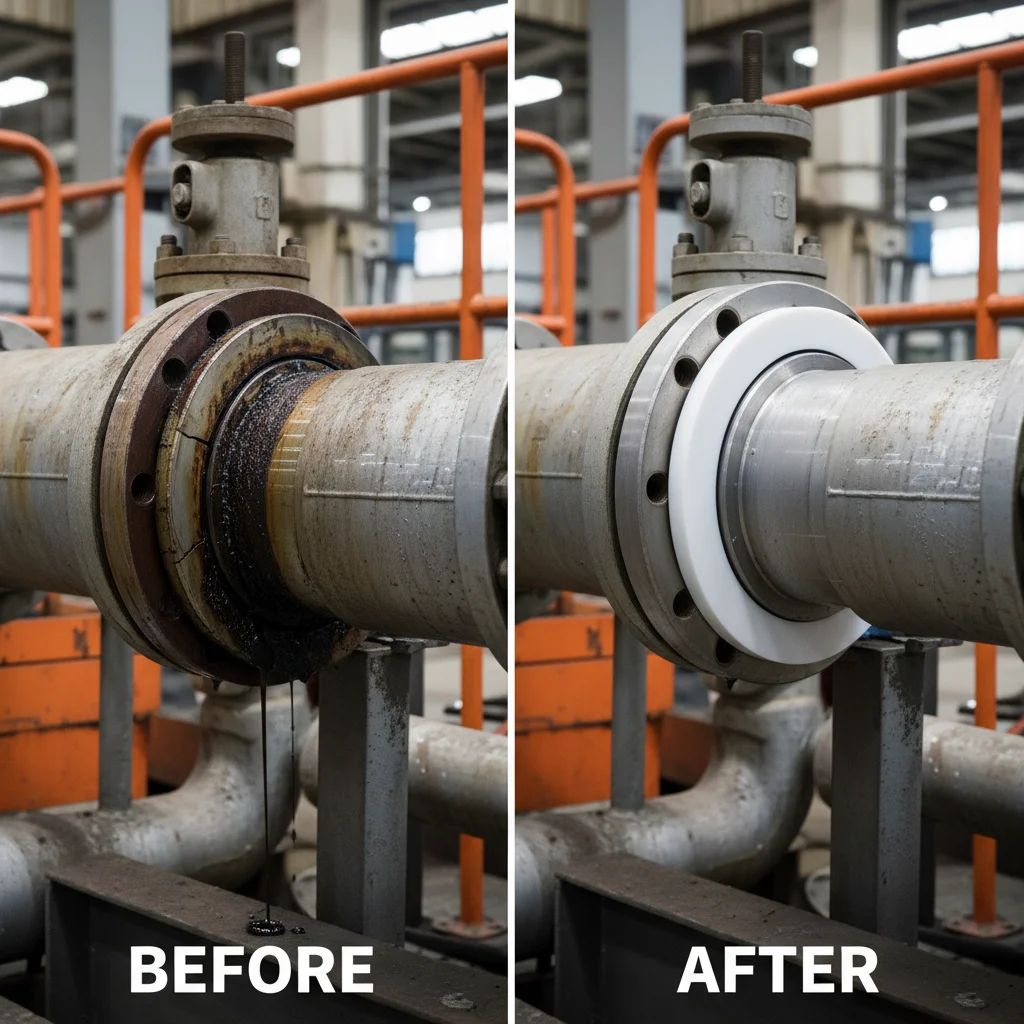
In summary, the Klingersil C-4400 gasket stands as a critical component for any industrial operation prioritizing safety, efficiency, and environmental compliance. By combining superior chemical resistance with thermal stability and mechanical strength, it solves the perennial challenge of flange leakage in the most demanding environments. Its transition from asbestos-based materials to advanced synthetic composites marks a significant step forward in industrial health and safety.
Looking ahead, the continued integration of the Klingersil C-4400 gasket into smarter, more sustainable industrial ecosystems will be key to achieving zero-leakage targets. We encourage plant managers and engineers to evaluate their current sealing strategies and upgrade to high-performance solutions to ensure long-term operational resilience. Visit our website for more information: www.gzhtmf.com


Updated:

David Miller
David Miller is a Senior Application Engineer at HUITE Sealing, bringing over 15 years of experience in industrial sealing solutions. He specializes in gasket selection and implementation for the Oil & Gas and Power Generation sectors. David holds a Bachelor’s degree in Mechanical Engineering and is a certified KLINGER specialist. He’s been instrumental in adapting our spiral wound gaskets for demanding high-pressure applications, contributing significantly to projects involving critical infrastructure. He frequently authors technical articles for industry publications and enjoys collaborating with clients to optimize their sealing performance. David is a key point of contact for complex sealing challenges.


