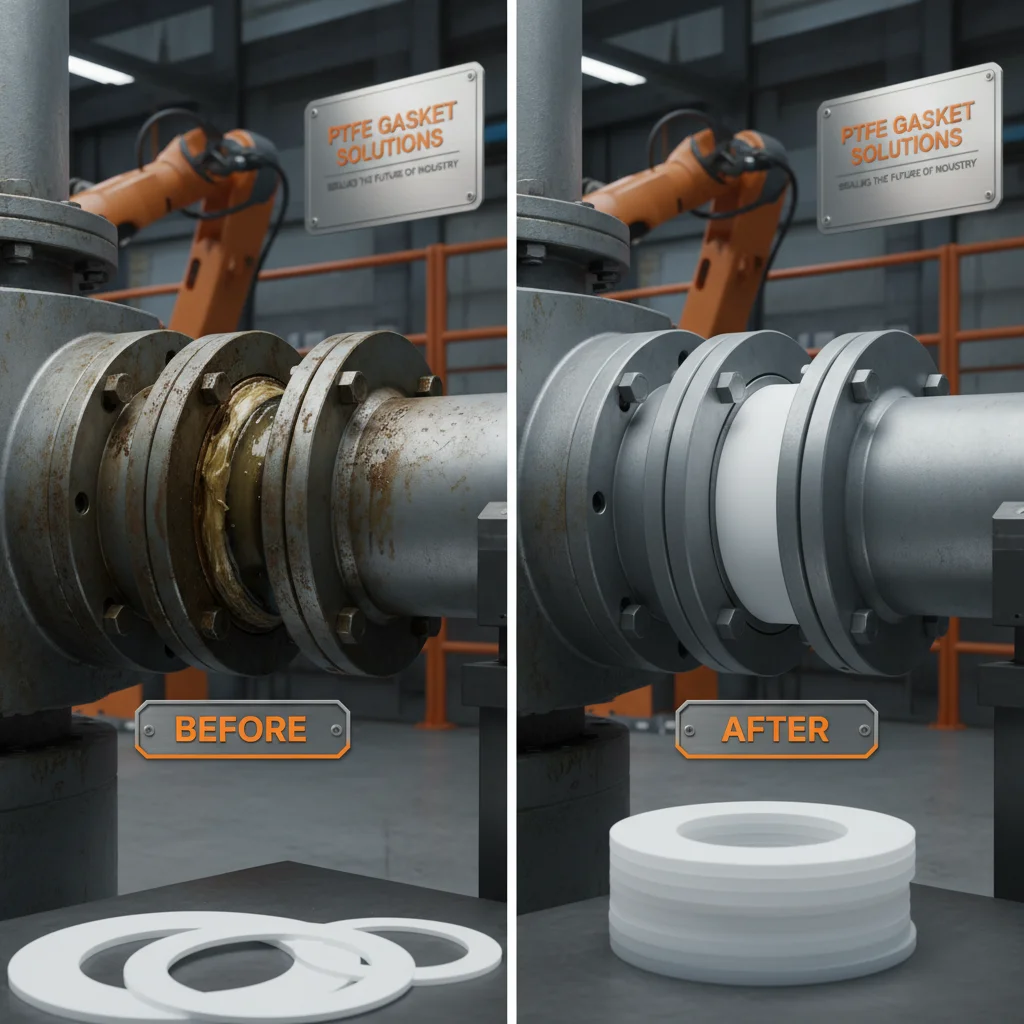
An asbestos free gasket manufacturer specializes in the production of high-performance sealing solutions that eliminate hazardous mineral fibers while maintaining the critical thermal and chemical resistance required for industrial piping. These manufacturers utilize advanced composite materials, such as the Klingersil C-4430, to ensure airtight and leak-proof seals in demanding environments where safety and environmental compliance are non-negotiable.
In the rubber and plastics manufacturing sector, the transition from traditional asbestos gaskets to non-asbestos alternatives is driven by stringent health regulations and the need for longer service intervals. Many industrial operators face challenges with premature seal failure and corrosive leaks, which can lead to unplanned downtime and significant safety risks in fluid and gas transport systems.
This article provides a comprehensive technical analysis of non-asbestos sealing technology, offering guidance on material selection, performance benchmarks, and procurement strategies. Readers will understand how to evaluate manufacturers based on material certifications and technical specifications to optimize the reliability of their industrial flange connections.

1Understanding Non-Asbestos Sealing Technology

Modern non-asbestos gaskets are engineered using a blend of synthetic fibers, metallic reinforcements, and high-grade elastomers. Unlike traditional asbestos seals, these composites are designed to create a compression seal that resists blowout and creep under high pressure. The focus is on achieving a molecular bond between the gasket surface and the flange face, ensuring that gases and liquids are contained even under thermal cycling.
The engineering behind products like the Klingersil C-4430 involves precise fiber orientation and binder distribution. This ensures that the material does not degrade when exposed to aggressive chemical agents, making it a viable replacement for asbestos in nearly all industrial piping applications.
Furthermore, the manufacturing process focuses on precision die-cutting and custom fabrication. This allows the gaskets to fit perfectly into existing flange kits, reducing the risk of gaps that could lead to hazardous emissions or system failure.
2Core Technical Advantages of Composite Gaskets
One of the primary advantages of choosing an asbestos free gasket manufacturer is the enhanced chemical stability of the products. Advanced composite materials are specifically formulated to resist degradation from acids, alkalis, and petroleum-based fluids, which often erode standard rubber gaskets quickly.
Thermal endurance is another critical factor. High-grade non-asbestos gaskets maintain their sealing force across a wide temperature range, preventing the "blow-out" effect often seen in lower-quality materials when systems undergo rapid heating or cooling phases.
Additionally, these gaskets provide superior leak-proof security. The density of the fiber composition ensures that the material fills the microscopic irregularities of the flange surface, creating a virtually impermeable barrier against hazardous emissions.
3Critical Industrial Application Scenarios
Non-asbestos gaskets are indispensable in the Oil & Gas and Chemical industries, where piping systems transport highly corrosive fluids. In these environments, the ability of a gasket to maintain an airtight seal while resisting chemical attack is the difference between smooth operation and a catastrophic leak.
In shipbuilding and marine engineering, gaskets must withstand not only pressure and temperature but also the corrosive effects of saltwater environments. The use of reinforced graphite or PTFE gaskets, often provided by professional manufacturers, ensures long-term durability in these harsh conditions.
Power generation plants also rely heavily on these components for sealing valves and pumps. The reliability of the seal directly impacts the efficiency of the heat exchange process and the safety of the plant operators.
4Performance Benchmarking and Seal Reliability
When comparing standard rubber gaskets with premium non-asbestos solutions like the C-4430 series, the difference in reliability is stark. Standard rubber often fails under high-pressure conditions or when exposed to solvents, whereas composite gaskets are engineered for these exact stressors.
Performance metrics typically focus on the "compression set"—the ability of the gasket to return to its original thickness after load is removed. A lower compression set indicates a more durable gasket that can handle more thermal cycles without losing its seal.
Asbestos free gasket manufacturer Performance Metrics
The data indicates that by switching to a specialized asbestos free gasket manufacturer, facilities can see a marked increase in seal reliability and a corresponding decrease in the frequency of emergency shutdowns for gasket replacement.
5Procurement Criteria for Industrial Sealing
Procuring the right sealing solution requires a deep understanding of the operating environment. Engineers should first identify the maximum operating pressure and temperature, as well as the specific chemical composition of the fluid being transported.
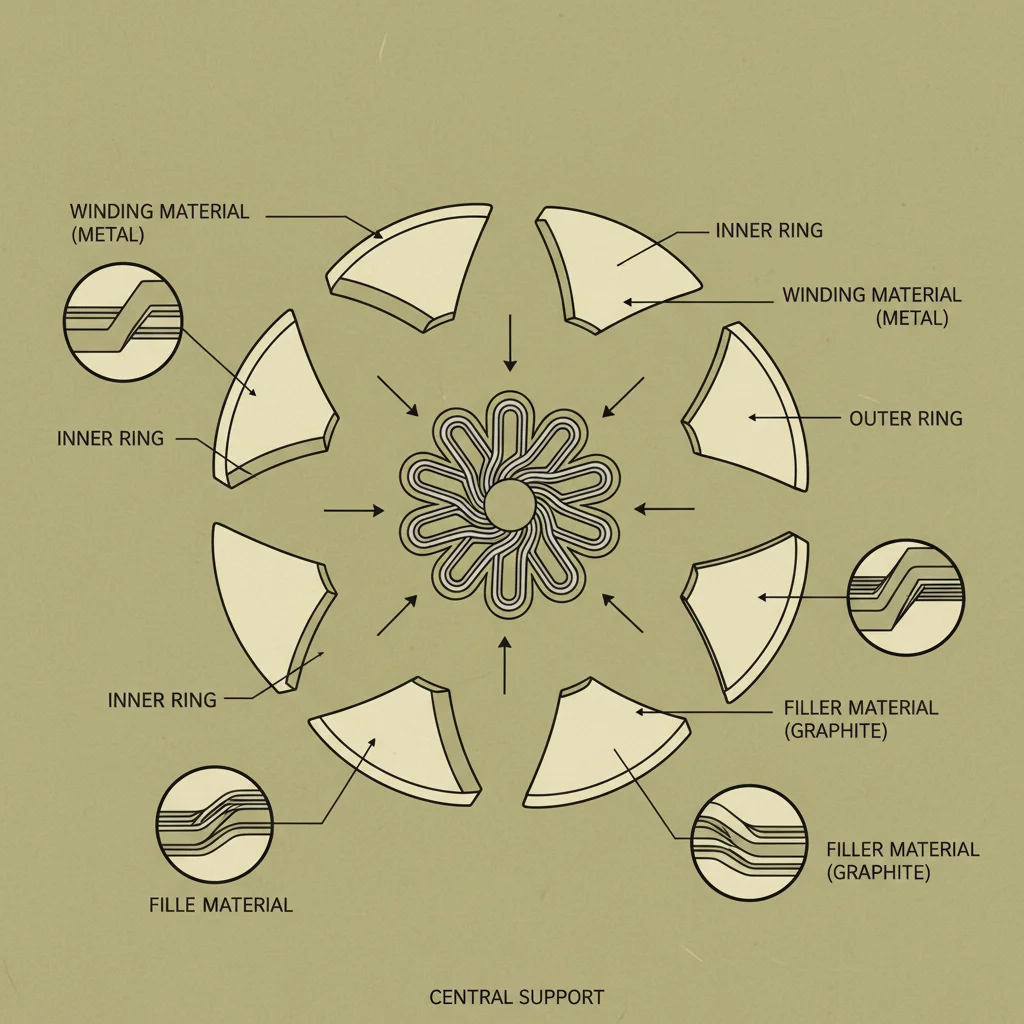
Evaluating the manufacturer's capabilities is equally important. A professional supplier should offer a range of products, from PTFE and reinforced graphite to specialized spiral wound gaskets, to provide a one-stop solution for diverse industrial needs.
Finally, consider the total cost of ownership. While a premium non-asbestos gasket may have a higher initial cost than a standard rubber one, the extended service life and reduced maintenance costs result in a significantly higher ROI over time.
6Future Trends in Eco-Friendly Sealing Materials
The industry is moving toward "smart gaskets" that can provide real-time data on seal integrity. Integrating sensors into non-asbestos composites allows operators to detect leaks before they become critical, transitioning from scheduled maintenance to predictive maintenance.
Sustainability is also driving innovation. New bio-based binders are being tested to replace synthetic resins, further reducing the environmental footprint of gasket production without sacrificing the thermal or chemical properties of the seal.
As global health regulations tighten, the demand for certified 100% non-asbestos compositions will grow, forcing manufacturers to adopt more rigorous quality control platforms to verify material density and purity.
7Material Comparison and Selection Guide
Selecting the appropriate gasket material is a balance between performance requirements and budget. Different materials excel in different scenarios; for example, PTFE is ideal for extreme chemical resistance but may struggle with very high pressures compared to spiral wound options.
The following table summarizes the key differences between common sealing materials used by a professional asbestos free gasket manufacturer to help you make an informed decision based on your specific application.
| Material Type | Best Use Case | Main Strength | Primary Limitation |
|---|---|---|---|
| Standard Rubber | Low-pressure water | Low Cost | Low Temp/Chem Resistance |
| Non-Asbestos Fiber | General Industrial | Versatility | Moderate Pressure Limit |
| PTFE Gasket | Aggressive Chemicals | Chemical Inertness | Cold Flow / Creep |
| Reinforced Graphite | High Temp Steam | Thermal Stability | Oxidation at Ultra-High Temp |
| Spiral Wound | High Pressure/Temp | Blow-out Resistance | Higher Installation Cost |
| Klingersil C-4430 | High-Perf Industrial | Balanced Stability | Specific Torque Required |
By aligning the material properties with the operational risks of your system, you can ensure maximum safety and minimize the risk of unexpected leakage, thereby protecting both your assets and your personnel.
Frequently Asked Questions
Conclusion
Selecting a reliable asbestos free gasket manufacturer is a critical decision for any industrial operation prioritizing safety, compliance, and efficiency. By moving away from hazardous materials and adopting advanced composites like the C-4430, companies can achieve a superior balance of thermal endurance and chemical stability, significantly reducing the risk of costly leaks and unplanned downtime.
To ensure the highest level of system integrity, procurement teams should focus on certified materials and precise technical specifications. Those evaluating suitable sealing solutions for their specific industrial needs can review the available product information and technical support at www.gzhtmf.com.