Guangzhou Huite Sealing Machinery Co., Ltd.



0%
The TESNIT BA-GL gasket represents a crucial component in modern sealing technology, playing a vital role across diverse industries globally. Its ability to maintain integrity under extreme conditions – temperature, pressure, and chemical exposure – makes it indispensable in sectors ranging from automotive and aerospace to oil & gas and pharmaceutical manufacturing. Understanding the nuances of TESNIT BA-GL gasket design, materials, and application is paramount for engineers and technicians seeking to optimize performance and prevent costly failures.
The global demand for reliable sealing solutions is steadily increasing, driven by factors such as stricter environmental regulations, the rise of advanced manufacturing processes, and the need for enhanced safety standards. TESNIT BA-GL gaskets are particularly valuable in applications where traditional gaskets fall short, offering superior resistance to degradation and a longer service life. This translates to reduced downtime, lower maintenance costs, and improved operational efficiency for businesses worldwide.
Furthermore, advancements in material science are continually pushing the boundaries of TESNIT BA-GL gasket performance. New polymer formulations and manufacturing techniques are resulting in gaskets that can withstand even more challenging environments, opening up new possibilities for their use in emerging technologies and demanding applications. TESNIT BA-GL gasket innovation continues to be a key focus for manufacturers and researchers alike.

Table of Contents [Hide]
The Core Principles of TESNIT BA-GL Gasket Design
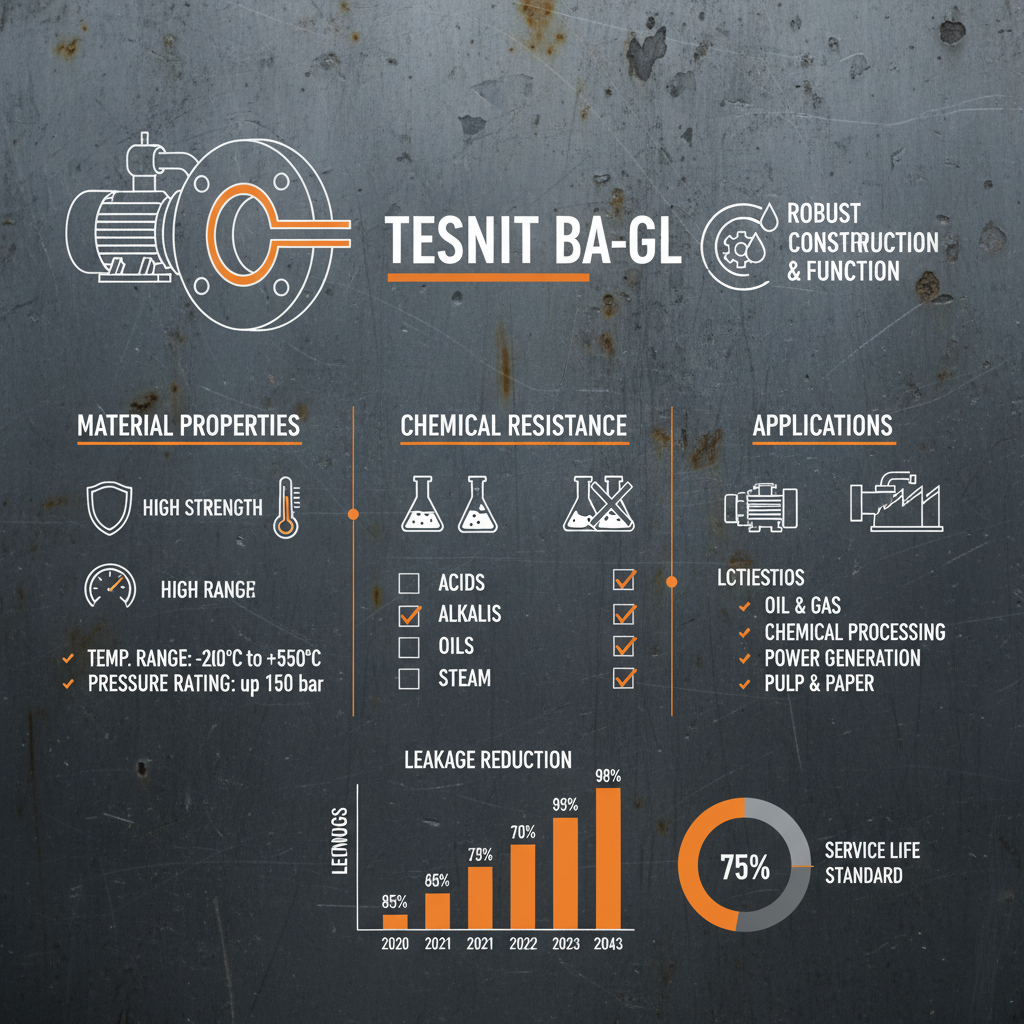
The fundamental principle behind TESNIT BA-GL gasket design revolves around achieving a secure and reliable seal under a wide range of operational parameters. This involves careful consideration of factors like flange surface finish, bolt load distribution, and the gasket’s ability to conform to irregularities. Proper gasket selection and installation are crucial to preventing leaks and ensuring the long-term integrity of the system.
Moreover, the specific geometry of the TESNIT BA-GL gasket – including its cross-sectional shape and the presence of any anti-stick coatings – plays a significant role in its performance. These design elements are tailored to optimize compression, minimize friction, and maximize resistance to blowout.
FAQS
What is the typical lifespan of a TESNIT BA-GL gasket in a standard automotive engine?
The typical lifespan of a TESNIT BA-GL gasket in a standard automotive engine varies based on operating conditions, oil change frequency, and engine temperature. However, a well-maintained TESNIT BA-GL gasket can generally last between 50,000 and 100,000 miles. Regular inspections and adherence to manufacturer recommendations are crucial for maximizing lifespan and preventing leaks. Proper torqueing during installation also significantly impacts longevity.
Are TESNIT BA-GL gaskets compatible with all types of coolants?
While TESNIT BA-GL gaskets demonstrate good compatibility with most common coolants, it's essential to verify compatibility with specific coolant formulations, particularly those containing extended-life corrosion inhibitors. Some coolants, especially those based on organic acid technology (OAT), can potentially degrade certain gasket materials over time. Consulting a compatibility chart or contacting the gasket manufacturer is recommended.
How does temperature affect the performance of a TESNIT BA-GL gasket?
Temperature plays a significant role in the performance of a TESNIT BA-GL gasket. High temperatures can cause the gasket material to degrade, lose elasticity, and become more prone to leaks. Conversely, extremely low temperatures can make the gasket brittle and susceptible to cracking. Selecting a gasket material rated for the specific operating temperature range is critical for maintaining a reliable seal.
What is the correct procedure for installing a TESNIT BA-GL gasket to ensure a leak-proof seal?
Correct installation is paramount for achieving a leak-proof seal with a TESNIT BA-GL gasket. This includes thoroughly cleaning the flange surfaces, applying a thin, even layer of sealant (if recommended by the manufacturer), and tightening the bolts to the specified torque values in the correct sequence. Over-tightening can damage the gasket, while under-tightening can lead to leaks. Always follow the manufacturer's installation guidelines.
What are the advantages of using a multi-layer steel TESNIT BA-GL gasket over a traditional rubber gasket?
Multi-layer steel TESNIT BA-GL gaskets offer superior performance compared to traditional rubber gaskets in high-temperature, high-pressure applications. They provide better resistance to creep relaxation, thermal cycling, and chemical attack. Their robust construction allows them to maintain sealing force over extended periods, resulting in increased reliability and reduced leakage. They are often preferred in demanding engine applications.
Can TESNIT BA-GL gaskets be reused after disassembly?
Generally, TESNIT BA-GL gaskets are designed for one-time use. Upon disassembly, the gasket's sealing surface may be deformed or damaged, compromising its ability to create a reliable seal upon reinstallation. Reusing a gasket significantly increases the risk of leaks and potential system failures. It is always recommended to install a new gasket whenever a component is disassembled.
Conclusion
In conclusion, the TESNIT BA-GL gasket stands as a critical component in ensuring the reliability and efficiency of countless industrial processes and applications. From its rigorous adherence to global standards and its diverse material compositions to its advanced performance indicators and future technological advancements, TESNIT BA-GL gaskets represent a significant contribution to sealing technology. Understanding the core principles behind their design, installation, and application is paramount for engineers and technicians alike.
Looking ahead, continued innovation in materials science, manufacturing techniques, and digital integration will undoubtedly further enhance the performance and sustainability of TESNIT BA-GL gaskets. By embracing these advancements and prioritizing quality and reliability, we can ensure that TESNIT BA-GL gaskets continue to play a vital role in shaping a safer, more efficient, and more sustainable future. Visit our website to learn more: www.gzhtmf.com.
Related Posts
-
TESNIT BAUB Gasket Solutions for Industrial Sealing Applications
-
KLINGER softchem gasket Advanced Sealing Solutions for Diverse Industries
-
KLINGER topchem 2003 gasket Performance Applications and Industrial Sealing Solutions
-
Advanced DONIT gasket Solutions for Industrial Sealing and Performance Optimization
Updated:

Michael Johnson
Michael Johnson is a dedicated Sales Engineer at HUITE Sealing, focused on the Marine and Shipbuilding industries. He boasts 8 years of experience in technical sales, providing tailored gasket solutions for various vessel types and offshore platforms. Michael holds a strong understanding of marine regulations and requirements. He actively participates in industry trade shows and builds strong relationships with key clients, advocating for the benefits of our reinforced graphite and rubber gaskets. He prides himself on delivering exceptional customer service and rapid response times.


